FROM THE LAND
BLACK TRUFFLES FROM ÑUBLE
From the Source to The Singular's Kitchens
Coihueco, Ñuble Region, Chile
Some ingredients carry value long before they reach the kitchen. Black truffles are among them.
Executive Chef Hernán Basso of The Singular Hotels traveled to Coihueco in Chile’s Ñuble Region, accompanied by two of his sous chefs: Diego Vega (The Singular Patagonia) and Claudio Bello (The Singular Santiago). The team met with Terratruf founder Javier Rozas to learn firsthand about his work.
Among holm oaks, damp earth, and guided by specially trained dogs, the culinary team joined a harvest defined by patience, close observation, and years of accumulated knowledge.
beneath the soil
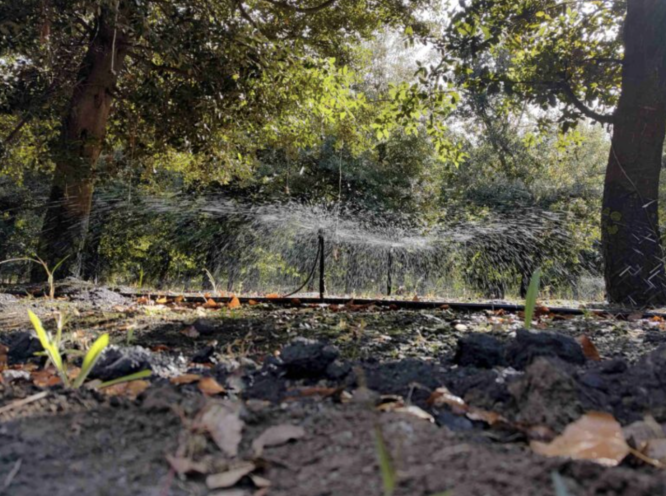
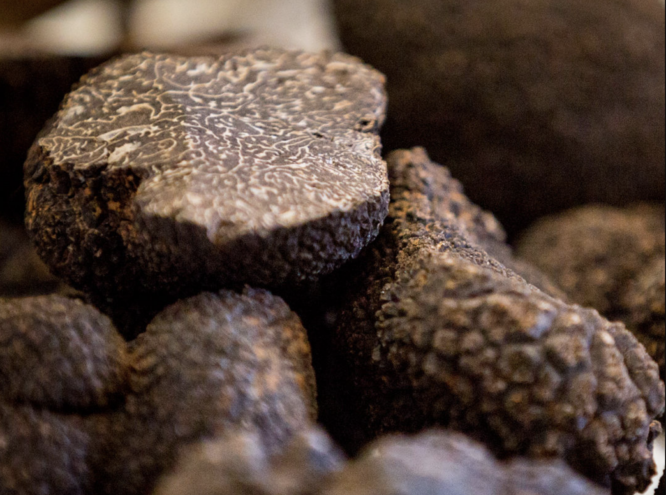
Black truffles (Tuber melanosporum) grow underground in a symbiotic relationship with the roots of specific trees. At Terratruf, they are cultivated primarily alongside Spanish holm oaks—a process that demands time, care, and precise growing conditions.
Specially trained dogs detect the scent of mature truffles, alerting the foragers the moment they are ready to be carefully harvested.
a harvest guided by scent
Once located, each truffle is delicately unearthed from the soil. The harvest combines the dogs’ keen sense of smell with the team’s careful hands— a precise process guided by experience, intuition, and a deep knowledge of the crop.
in the singular's kitchen
Understanding how an ingredient is cultivated and harvested changes the way it is approached in the kitchen. At The Singular Santiago and The Singular Patagonia, black truffles are featured in select dishes with close attention paid to their intensity, seasonality, and provenance. The connection between ingredient, craft, and origin begins long before a dish reaches the table.
terratruf
Javier Rozas founded Terratruf in 2007 to cultivate a crop that was still largely unfamiliar in Chile. He established the plantation in Coihueco the following year, and after a six-year wait, the first truffles finally appeared in 2014.
Growing them has required close observation, continuous learning, and adaptation to local conditions. Even today, much of the labor is done by hand.
Behind every exceptional ingredient are time, expertise, and dedicated people.