
VOCES DEL LUGAR ·
LEARNING TO SEE PATAGONIA
A PERSPECTIVE SHAPED
You arrived in Patagonia more than a decade ago. What did you see then that you see completely differently today?
Timothy Dhalleine:
What struck me most when I arrived in Patagonia was how untouched the land was. It was truly wild, unlike anything I had seen in Europe, where I grew up.
Twelve years later, I have learned to understand and value the essence of this place far more deeply. Today, I appreciate its pristine nature not only for its beauty, but also for all the inspiration and history it holds.
When I look at the fjords, for example, I think of the Indigenous peoples who navigated those waters, facing extreme weather without maps or infrastructure. When I look at the peaks, I think of the pioneers who ventured onto their faces when Torres del Paine was still almost unknown to the wider world.
I would say that today I see legacy where I once saw only wonder.
“Today, I see legacy where I once saw only wonder.”
You have photographed Torres del Paine hundreds of times. What makes such a familiar landscape feel different each time you return to it?
Timothy Dhalleine:
No two photographs of Torres del Paine are alike. Every sunrise is different because of the light, clouds, wind and all the conditions that transform the landscape from one moment to the next.
I think that is precisely what makes photographing Patagonia so compelling: no day here is ever the same as the one before. The landscape is constantly changing, and photography allows us to capture, if only for an instant, something that will never occur in exactly the same way again.
You speak about wanting a photograph to make people feel the wind or understand the scale of Patagonia. How do you photograph something that cannot be seen?
The magic of nature photography lies in making an image feel alive. Beyond understanding composition, it is also about conveying emotion by painting with light and shadow.
Through that light, we can express what cannot be seen directly: the wind bending a tree, threatening clouds gathering above the landscape or the gaze of an animal facing the icy winter air.
Photographing the invisible is, in a way, learning to show the traces it leaves behind.
“Photographing the invisible is learning to show the traces it leaves behind.”
Wildlife, Patience and Distance
What have years of observing Patagonian wildlife taught you that a first-time visitor might easily miss?
Timothy Dhalleine:
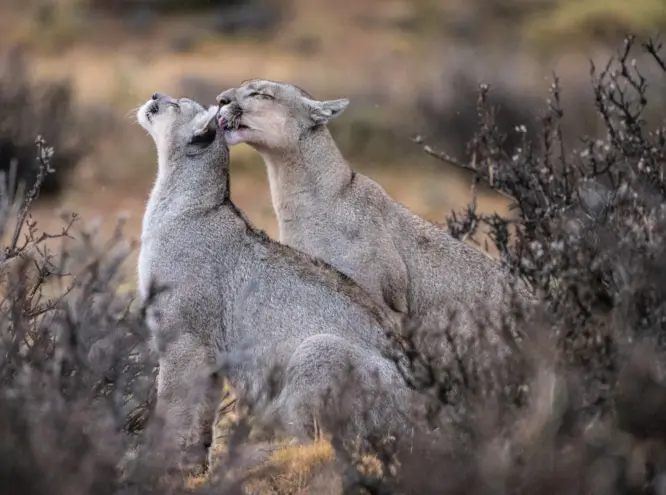
Photographing wildlife is not simply about showing the beauty of an animal. It is also an attempt to convey something of its behavior and emotions.
Over the years, above all, I have learned patience: to wait for the moment that can transform a beautiful image into a truly powerful photograph.
Often, my favorite photographs are not those in which the animal looks directly at the camera, but those moments when it interacts with another animal, responds to its surroundings or simply does something unexpected.
I believe Patagonian wildlife reveals its true nature when we learn to observe it with calm, time and distance. The less we try to force a scene, the more authentic what we are given the chance to witness becomes.
“Today, I see legacy where I once saw only wonder.”
Is there a particular animal in Patagonia whose behavior has changed the way you understand this land?
Timothy Dhalleine:
I would say the guanaco. Although guanacos are common throughout southern Patagonia, they represent the resilience, community and capacity for adaptation that this land demands.
They move in search of better conditions and food according to the season. Within each group, there are always individuals alert to possible predators, often keeping watch from higher ground. They also convey a remarkable range of emotions, particularly during the birthing season, when powerful bonds can be observed between mothers and their young.
There is also something profoundly Patagonian about their presence. They blend naturally into the landscape and, for me, are among the animals that most clearly express the visual essence of this place.
Beyond the Landscape
You have also photographed the people who live and work in Patagonia. What did they teach you about this place that the landscape alone could not?
Timothy Dhalleine:
The landscapes are wild, and I believe something of that untamed character is also expressed through the people.
There are faces that convey wisdom, simplicity and a sense of calm that is difficult to find elsewhere. Patagonia teaches you not to rush, to adapt and to live with a certain humility before nature and life.
I believe the people who live and work here carry part of that lesson with them.
Emotion and Conservation
Your work is grounded in the idea that emotion can lead to conservation. What does a person need to feel in nature before wanting to protect it?
Timothy Dhalleine:
There is a well-known saying that “you cannot protect what you do not know.” But I believe that, beyond knowledge, our society has also lost some of its capacity for wonder.
Most of us do not have the privilege of living in genuine connection with nature. We live surrounded by technology and constant stimulation, increasingly removed from the beauty of simple things.
Wonder appears when we stand before something greater than ourselves- something that makes us feel small and compels us to see differently. When a person experiences that genuine sense of wonder in nature, it inevitably changes the way they relate to it.
Before wanting to protect something, perhaps we first need to rediscover our capacity to marvel at it.
Living with Patagonia
What have you learned from the Patagonian wind after living with it for so many years? Is it simply part of the landscape, or does it also change the way people live here?
Timothy Dhalleine:
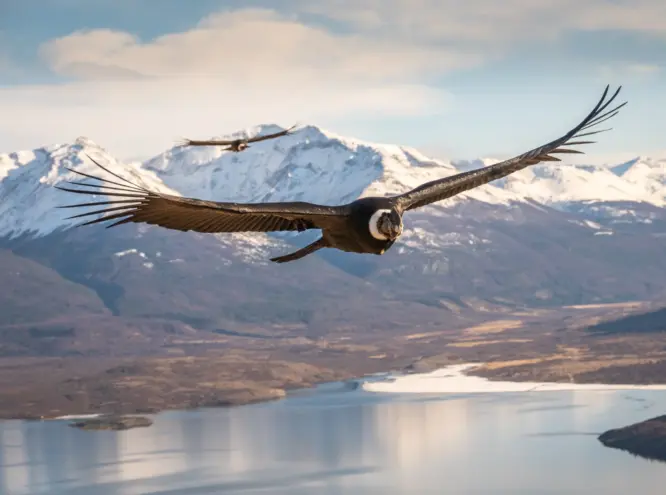
For me, the wind is one of the purest expressions of nature’s force in Patagonia. It moves without limits, with an intensity that cannot be ignored.
Living with it also teaches humility. It forces you to adapt, respect the rhythms of the land and accept that not everything can be controlled.
The Patagonian wind is a constant reminder of how small we are before the immensity of nature and life.
When someone arrives in Patagonia for the first time, what would you encourage them to notice—not necessarily photograph—to begin to understand where they are?
Timothy Dhalleine:
When arriving in Patagonia for the first time, I believe it is essential to take the time to observe without distractions, without a camera and without a phone.
Walking through a place such as Torres del Paine can feel like a conversation with the Earth. In those moments of silence, wind and immensity, when you simply watch and listen, the true essence of the land begins to reveal itself.
Before trying to photograph Patagonia, I believe you first have to learn to be present within it.
“Before trying to photograph Patagonia, you first have to learn to be present within it.”
After more than a decade here, what does living in Patagonia mean to you today?
Timothy Dhalleine:
Living in Patagonia means allowing yourself to be amazed each day by the simplest moments: the moon illuminating the steppe, a herd of guanacos moving with snow-covered mountains behind them or the sky turning pink along the edge of a fjord.
For me, living in Patagonia means preserving that capacity for wonder in the everyday, even after so many years.
Timothy Dhalleine
Timothy Dhalleine is a French photographer and filmmaker based in Chilean Patagonia since 2014. His work focuses on nature, wildlife and the relationship between people and the land, with Torres del Paine serving as one of its principal settings.
His approach combines visual storytelling, conservation and a human perspective on Patagonia. His photography and films have received recognition and official selections from the Audubon Photography Awards, Festival International Nature Namur and Kendal Mountain Festival.
Timothy is the founder of WILDNESS, a creative production company based in Chilean Patagonia. It develops photography, film and content projects for brands and organizations, with a particular focus on nature, place and conservation.
INSTAGRAM: @timothydhalleine
WEBSITE: https://thewildness.org/en/
